Ever scrolled through social media and stumbled upon someone saying, “Inquiring minds want to know” after a juicy piece of news or a funny story?
You probably paused and thought, “Wait… what exactly does that mean?” You’re not alone. This phrase pops up everywhere—from memes to WhatsApp chats—and it carries a mix of curiosity, humor, and sometimes subtle sarcasm.
As someone who’s spent years analyzing online slang and trends, I’ve seen how this phrase has evolved. If you’re trying to use it naturally in conversation or just want to decode your friend’s texts, understanding its true meaning matters more than you think.
What “Inquiring Minds Want to Know” Means (Direct Ans)
“Inquiring minds want to know” is a playful way of saying that curious people want information. It’s often used when someone is jokingly expressing interest in gossip, secrets, or details about a topic, without being too serious or formal.
Meaning & Definition
At its core, “inquiring minds want to know” means someone is curious.
- Primary meaning: Expresses interest in getting information, often in a light-hearted or humorous way.
- Secondary meaning: Sometimes sarcastic, hinting that the speaker is poking fun at their own curiosity or teasing the other person.
Chat examples:
- Friend 1: “Did you hear what happened at the party?”
Friend 2: “Inquiring minds want to know 😏” - Friend 1: “I’m thinking of quitting my job…”
Friend 2: “Inquiring minds want to know! Are you serious?”
Background & Origin
The phrase traces back to mid-20th-century media, originally used in newspapers and magazines to encourage readers to stay curious or engaged with content. Over time, it became a playful saying in everyday English, especially online, where it’s used more for teasing or humor than formal inquiry.
It gained traction on social media as people embraced it for memes, reactions, and witty commentary.
Usage in Different Contexts
Casual Chats
Used among friends to show curiosity in a funny or teasing way.
“You got a new phone? Inquiring minds want to know 😎”
Social Media
Often appears in Instagram captions, tweets, or TikTok comments when reacting to gossip or announcements.
Professional Use
Rarely used in formal professional settings, but could appear humorously in team chats or newsletters.
Gaming / Group Chats
Gamers use it to react to strategy leaks or unexpected gameplay news.
“Wait, you got the secret loot? Inquiring minds want to know!”
Meanings Across Platforms
| Platform | Tone | Example |
| Playful | “He’s dating someone new… inquiring minds want to know 😏” | |
| Teasing | Comment under a story: “Inquiring minds want to know 👀” | |
| TikTok | Funny | Caption on gossip video: “Inquiring minds want to know 😂” |
| Snapchat | Casual | Reply to snap: “Inquiring minds want to know 👀” |
| Discord | Sarcastic | In group chat: “He’s leaving the guild? Inquiring minds want to know 😎” |
Real-Life Examples & Memes
- Meme-style: Picture of someone peeking around a corner: “Inquiring minds want to know”
- Chat-style:
Friend 1: “Guess who just got promoted?”
Friend 2: “Inquiring minds want to know 😏”
Cultural or Regional Interpretations
- US / UK: Mostly humorous or sarcastic, used in casual chats or online posts.
- Asia (India, Pakistan, Philippines): Used similarly, often to lighten conversations or tease friends.
- Australia: Less common, but still understood in casual circles.
Other Meanings
| Field | Meaning | Description |
| Media | Curiosity-driven tagline | Used in newspapers/magazines to encourage engagement. |
| Psychology | Playful curiosity | Expressing interest without pressure or seriousness. |
| Education | Encouraging inquiry | Promotes learning through questioning. |
Inquiring Minds Want to Know or Enquiring
Both “inquiring” and “enquiring” are correct spellings of the same phrase. The difference mainly depends on English style.
“Inquiring” is used in American English, while “enquiring” is more common in British English. Both words mean to ask questions or show curiosity.
So, no matter which spelling you see, the meaning stays the same — people are curious and want answers.
Inquiring Minds Want to Know – Meaning
The phrase “inquiring minds want to know” means that curious people are eager to learn more about something.
It is often used in a fun or dramatic way when someone wants information or gossip.
For example, if something interesting happens, people might say this phrase to show they want details.
It highlights human curiosity and the desire to understand things better.
Inquiring Minds Want to Know Meme
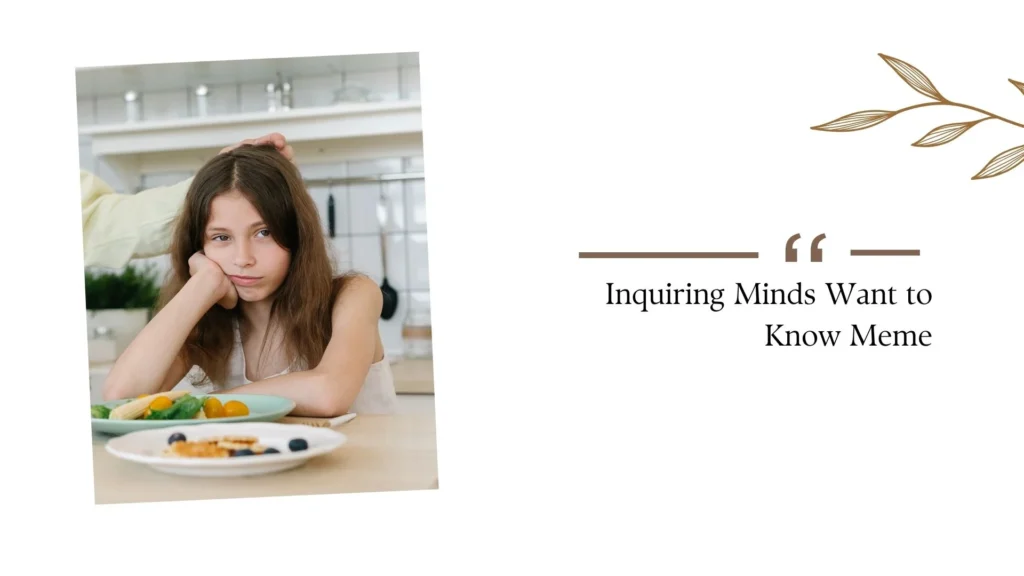
The “inquiring minds want to know” meme is used on social media to humorously show curiosity.
People use it when they are teasing someone or waiting for juicy information.
It often appears with funny images, reaction photos, or captions asking for secrets.
The meme makes everyday curiosity look playful and entertaining.
Inquiring Minds Want to Know Movie
“Inquiring Minds Want to Know” is not a major mainstream movie title, but the phrase has been used in different media, jokes, and pop culture references.
It often appears in TV shows, comedy sketches, and online content to express curiosity.
Sometimes it is also used as a title theme for discussions or entertainment segments.
Enquiring Minds Want to Know
“Enquiring minds want to know” is simply the British English version of the same phrase.
It carries the same meaning — people are curious and want information.
This version is commonly seen in UK writing, magazines, and older publications.
Both spellings are correct depending on region.
Inquiring Minds Want to Know Origin
The phrase became popular in American advertising and pop culture during the late 20th century.
It was widely used in magazine ads and TV promotions to grab attention.
The idea behind it is simple: humans are naturally curious, and this curiosity drives interest and engagement.
Over time, it became a well-known expression used in memes and everyday speech.
Inquiring Minds Want to Know GIF
The “inquiring minds want to know” GIF is used online to show curiosity in a funny way.
These GIFs often feature surprised faces, people whispering, or dramatic reactions.
They are commonly used on platforms like Twitter, Instagram, and messaging apps.
It adds humor when someone is waiting for gossip or details.
Inquiring Minds Want to Know Lost Boys
The phrase is sometimes linked with “The Lost Boys,” a popular 1987 vampire movie.
Fans or online discussions may use the phrase jokingly when talking about mysteries or secrets in the film.
However, it is not an official quote from the movie.
It is more of a pop culture connection created by fans and internet users.
Common Mistakes & Misconceptions
- Thinking it’s always formal—it’s casual or humorous.
- Using it in serious professional emails.
- Confusing it with “I need to know urgently” – it’s playful, not demanding.
- Assuming it’s rude—tone matters.
Psychological / Emotional Meaning
- Positive: Shows interest, friendliness, playful curiosity.
- Neutral: Can be a filler response in chats.
- Negative: Sometimes sarcasm can make it sound mocking.
Similar Terms & Alternatives
| Word / Phrase | Meaning | Tone |
| “Curious minds want to know” | Synonym, slightly formal | Playful |
| “Spill the tea!” | Asking for gossip | Casual/fun |
| “Do tell” | Request for details | Polite/funny |
Is It Offensive or Friendly?
Generally friendly, though sarcasm can make it teasing. Example:
- Friendly: “Inquiring minds want to know what you cooked for dinner 😋”
- Teasing: “Inquiring minds want to know why you’re late… again 😏”
Grammar or Linguistic Insight
The phrase reflects how English evolves: formal “inquisitive minds” became playful “inquiring minds.” It’s a great example of language being shaped by culture, humor, and online communication.
How to Respond
- “Haha, can’t tell you yet 😅”
- “Stay curious, my friend 😉”
- “You’ll find out soon!”
- “Curiosity killed the cat 😏”
- “Guess you’ll just have to wait 😎”
Differences From Similar Words
| Phrase | Tone | Key Difference |
| “Curious minds” | Neutral | Less playful, slightly formal |
| “Spill the tea” | Fun | More gossip-oriented |
| “Do tell” | Polite | Simple request, less humorous |
Relevance in Dating & Online Culture
On apps like Tinder or Bumble, it’s used to show light-hearted curiosity. Gen Z loves using it in chats to tease without coming off too serious. Memes and TikTok videos have popularized it among young audiences worldwide.
Popularity & Trends
Thanks to TikTok and Instagram, this phrase is trending among Gen Z. It often appears in reaction memes, viral videos, and comment sections. People love using it when they want to show curiosity without being boring.
When NOT to Use “Inquiring Minds Want to Know”
- Formal work emails or professional reports.
- Serious conversations where someone is sharing personal issues.
- Legal, medical, or emergency contexts—tone may seem inappropriate.
FAQs
Q1: Is “inquiring minds want to know” sarcastic?
A: It can be, but it’s usually playful or teasing. Context matters.
Q2: Can I use it in texts with strangers?
A: Yes, but keep it light and casual to avoid misunderstanding.
Q3: Where did this phrase come from?
A: It originated in newspapers and media in the mid-20th century.
Q4: Is it considered rude?
A: Not usually. Tone determines if it’s friendly or teasing.
Q5: Can it be used professionally?
A: Rarely. It’s mostly informal or humorous.
Conclusion
“Inquiring minds want to know” is more than a phrase—it’s a playful way to express curiosity, share a laugh, or tease a friend.
Next time you see it pop up in your chat or on TikTok, you’ll know it’s all about curiosity wrapped in humor. Stay curious, stay playful, and don’t be afraid to use it yourself!

Emma Wilson is a lifestyle and wellness writer who focuses on mindful living and personal balance. Her words are warm, relatable, and designed to connect emotionally with readers.
Books:
-
Live Calm, Live Better
-
Everyday Joy Journal