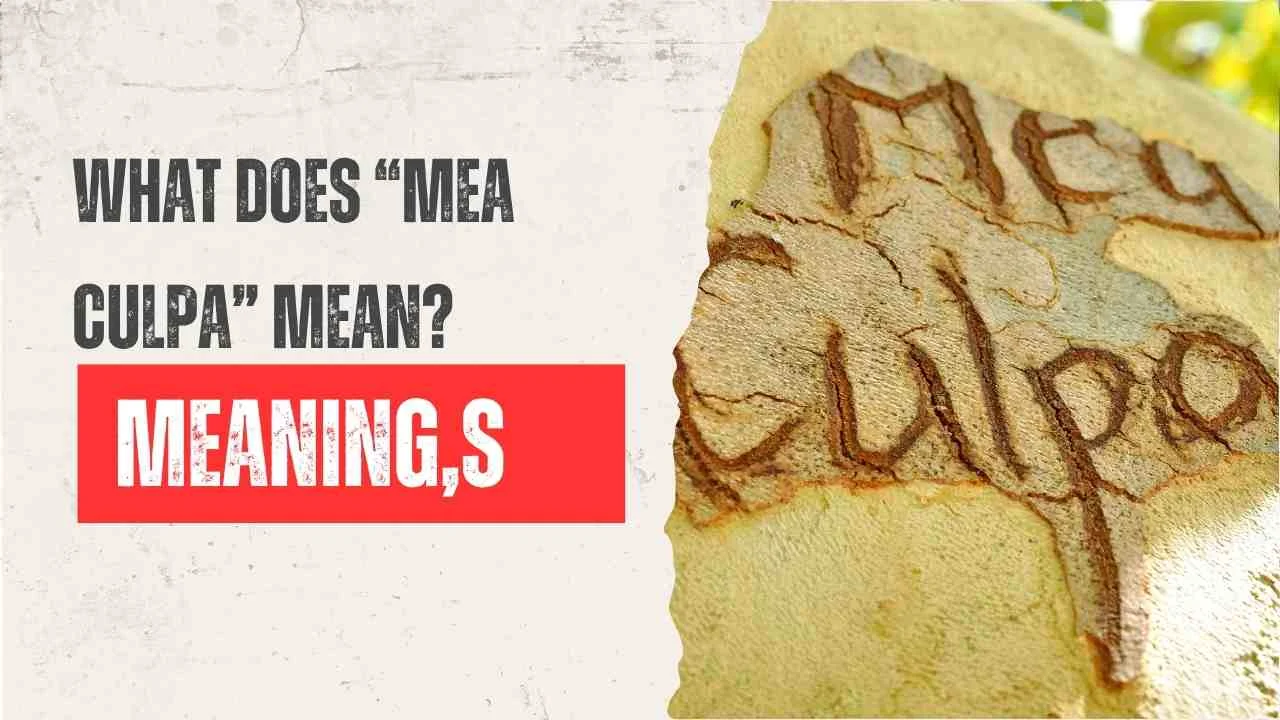
You might have seen someone type “mea culpa” in a chat, comment, or even in a movie and wondered—what on earth does that mean?
It sounds fancy, almost dramatic, like something from a courtroom or an old novel. But in reality, it’s used in everyday life more than you think, especially online when people admit a mistake in a stylish way.
Maybe someone messed up in a group chat and replied “mea culpa 😅” or a celebrity used it after a controversy. It feels formal, but also a bit playful depending on the context.
In simple terms, this phrase is all about accepting responsibility—but there’s more depth to it than just “my bad.”
(Insight based on common usage trends in digital communication and social media language patterns.)
What Does “Mea Culpa” Mean? (Direct Answer)
“Mea culpa” is a Latin phrase that means “my fault” or “I am to blame.” It is used when someone admits they made a mistake or takes responsibility for something wrong. The phrase is often used in formal writing, speeches, and modern online chats to express an apology or acknowledgment of error.
Meaning & Definition
The phrase “mea culpa” comes from Latin and is made up of two parts:
- “mea” = my
- “culpa” = fault or blame
So together, it literally means “my fault.”
Primary Meaning:
It is used to admit responsibility for an error or wrongdoing.
Secondary Meaning:
Sometimes it is used lightly or humorously in conversations when someone makes a small mistake.
Real Chat Examples:
- “I forgot to send the file, mea culpa 😅”
- “Mea culpa, I sent you the wrong link!”
It can sound serious or playful depending on tone and context.
Background & Origin
The phrase “mea culpa” comes from Latin, an ancient language used in Roman times and later in the Christian church.
It became widely known through religious confession prayers, where people would admit their sins by saying “mea culpa.”
Over time, it moved beyond religion and entered everyday language, especially in English-speaking countries.
Today, it is popular in:
- Formal apologies
- Media statements
- Social media posts
- Casual online chats
People use it because it sounds more expressive than just saying “my fault.”
Usage in Different Contexts
Casual Chats
Used jokingly or lightly among friends:
- “Oops, I forgot your birthday—mea culpa!”
Social Media
Used in captions or comments when admitting mistakes:
- “Posted wrong info earlier, mea culpa 🙏”
Professional Use
Used in formal apologies or reports:
- “Mea culpa for the delay in the project submission.”
Gaming / Group Chats
Used when someone messes up in a team game:
- “I lost us the match, mea culpa guys.”
Meanings Across Platforms
| Platform | Tone | Example |
| Casual | “Sent wrong pic, mea culpa 😂” | |
| Dramatic / Funny | “Forgot the caption, mea culpa 🙈” | |
| TikTok | Trendy / Meme | “Mea culpa for this chaos edit” |
| Snapchat | Light / playful | “Mea culpa, wrong snap sent” |
| Discord | Gaming / casual | “Mea culpa, I messed up the raid” |
Real-Life Examples & Memes
People often use “mea culpa” in funny or exaggerated ways online.
Chat Examples:
- “Mea culpa… I ate your fries 🍟😬”
- “I crashed the group project… mea culpa 😭”
Meme-Style Lines:
- “Mea culpa… I opened the wrong tab and lost everything 💀”
- “When you realize it was your fault all along: MEA CULPA MODE ACTIVATED”
It adds humor while still admitting responsibility.
Cultural or Regional Interpretations
US / UK
Often used in formal writing or sarcastic humor in media.
India / Pakistan / Philippines
Used more in online culture, often by English-speaking youth in memes or captions.
Australia
Less common in daily speech, but understood in academic or humorous contexts.
Other Meanings
| Field | Meaning | Description |
| Religion | Confession | Used in prayers to admit sin |
| Law | Admission | Acknowledging responsibility |
| Media | Apology phrase | Used in statements or interviews |
| Internet slang | Humor apology | Used casually online |
Common Mistakes & Misconceptions
- Thinking it means “excuse me” (it doesn’t)
- Using it in completely wrong contexts where no mistake is involved
- Assuming it is modern slang (it is actually ancient Latin)
- Overusing it in casual speech where simple “sorry” is better
- Mispronouncing it as “mea coola” or similar errors
Psychological / Emotional Meaning
“Mea culpa” carries different emotional tones:
- Positive: Shows honesty and accountability
- Neutral: Simple acknowledgment of mistake
- Negative: Can feel serious or guilt-heavy in formal contexts
It often reflects maturity because the speaker accepts responsibility instead of denying it.
Similar Terms & Alternatives
| Word / Phrase | Meaning | Tone |
| My fault | Direct responsibility | Casual |
| Sorry | Apology | Neutral |
| I messed up | Informal admission | Casual |
| I take responsibility | Formal accountability | Serious |
| Apologies | Polite regret | Formal |
Is It Offensive or Friendly?
“Mea culpa” is not offensive at all. It is actually respectful when used correctly.
However:
- In serious situations, it can feel too light if used jokingly
- In casual chats, it feels friendly and expressive
Example:
- Friendly: “Mea culpa 😂 I forgot!”
- Serious: “Mea culpa for the mistake in the report.”
Grammar or Linguistic Insight
“Mea culpa” is a Latin noun phrase, not a sentence.
Interestingly, English borrowed many Latin phrases like this and still uses them today in law, religion, and formal writing.
Over time, it became part of modern English “loan phrases,” meaning borrowed words that keep their original form.
How to Respond
If someone says “mea culpa,” you can reply in natural ways:
- “No worries!”
- “It’s okay, don’t stress it.”
- “Happens to everyone 😄”
- “All good!”
- “Thanks for owning it!”
Differences From Similar Words
| Phrase | Difference |
| Mea culpa | Formal + expressive apology |
| Sorry | Simple and universal |
| My bad | Casual slang |
| Apologies | Formal but neutral |
| I’m guilty | Strong admission of fault |
Relevance in Dating & Online Culture
On apps like Tinder or Instagram DMs, people use “mea culpa” to sound funny or smart when apologizing.
Example:
- “Mea culpa for not replying 😅”
- “Okay, mea culpa… I ghosted you (not proud of it)”
It adds personality to conversations and softens mistakes in a playful way.
Popularity & Trends
“Mea culpa” often trends in:
- Twitter/X apology posts
- TikTok captions
- Meme culture
- Gen Z humorous language
It’s not everyday slang, but it appears when people want a “fancier” apology.
When NOT to Use “Mea Culpa” (IMPORTANT)
Avoid using it in:
- Serious professional/legal mistakes where clarity is needed
- Emergency situations
- Conversations with people who may not understand Latin phrases
- Sensitive emotional apologies where simple sincerity is better
In such cases, plain language like “I’m sorry” works better.
FAQs
1. What does mea culpa literally mean?
It literally means “my fault” in Latin and is used to admit responsibility.
2. Is mea culpa a formal word?
Yes, it is formal, but it is also used casually in modern internet slang.
3. Can I use mea culpa in chat?
Yes, especially in funny or light situations when you made a small mistake.
4. Is mea culpa the same as sorry?
Not exactly. “Sorry” is simpler, while “mea culpa” sounds more expressive and formal.
5. Where did mea culpa come from?
It originated from Latin and was commonly used in religious confessions.
Conclusion
“Mea culpa” may sound old and complicated, but its meaning is simple—accepting your mistake. From ancient Latin prayers to modern memes, it has traveled a long journey into today’s digital world.
Whether used seriously or jokingly, it always carries one message: “I was wrong, and I accept it.”
And maybe that’s why it still feels powerful today—because owning your mistakes never goes out of style.

Sofia Lane is a romantic storyteller and relationship content creator who loves writing cute, sweet, and clever pickup lines.
She mixes humor with charm, helping readers express feelings in a fun and memorable way. Sofia’s writing style is playful, modern, and relatable.
perfect for people who want to flirt confidently and creatively.