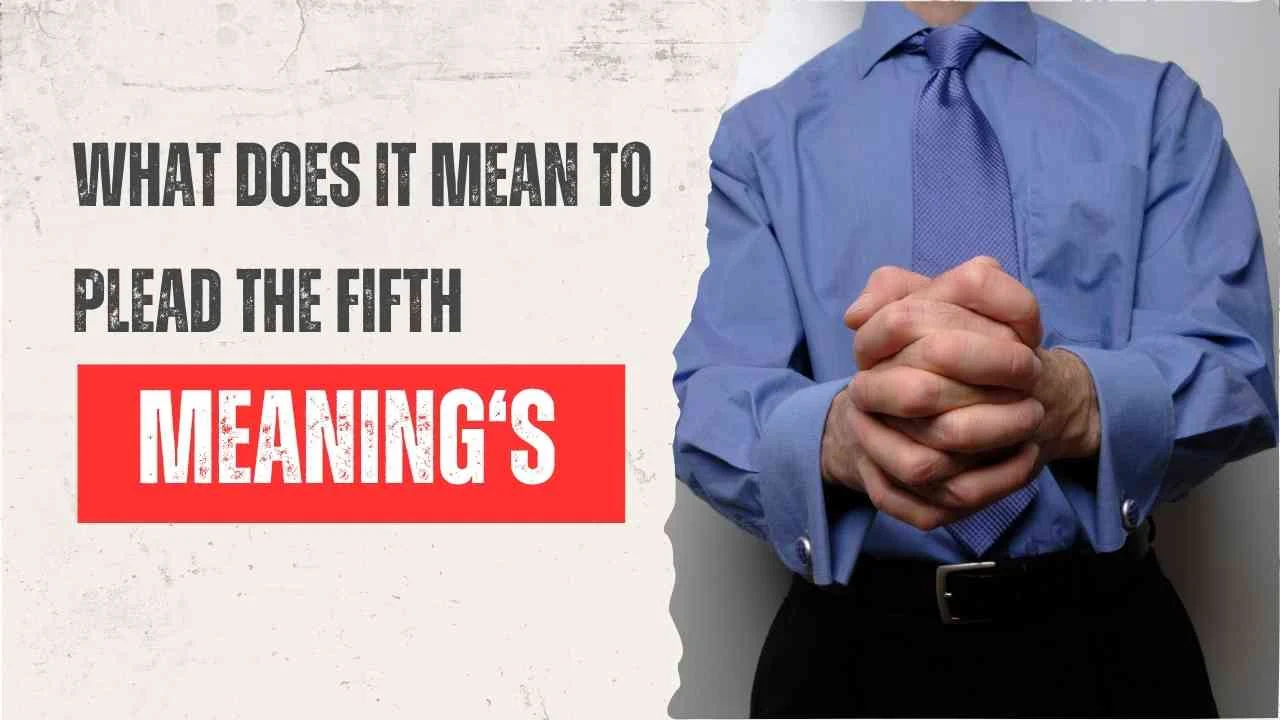
You’ve probably heard someone in a movie say, “I plead the Fifth,” and suddenly the room goes quiet. It sounds serious, powerful, and a little mysterious at the same time.
Maybe you saw it in a courtroom drama or a viral TikTok clip where someone avoids answering a tricky question. It makes you wonder—what are they really refusing to say?
This phrase is not just slang; it comes from real law and has deep meaning in the United States. Understanding it helps you see how people protect themselves legally when things get complicated.
In today’s internet world, people also use it jokingly in everyday conversations, which makes it even more popular and misunderstood.
This guide breaks it down in a simple, human way so you can finally understand it without confusion.
It Means Refusing to Answer Questions to Avoid Self-Incrimination
To “plead the Fifth” means a person refuses to answer a question because their answer might be used against them in a legal case. It comes from the Fifth Amendment of the U.S. Constitution, which protects people from self-incrimination. In simple words, it is a legal right to stay silent when answering could get you into trouble. People use it in court, interviews, and sometimes jokingly in everyday conversations.
Meaning & Definition
The phrase “plead the Fifth” comes from a legal right that allows a person to stay silent during questioning. It mainly means you do not have to answer questions that could make you look guilty or create legal problems for you.
Primary meaning:
It is a legal protection that allows someone to refuse to answer questions in court or official investigations.
Secondary meaning:
In casual use, it means avoiding a question because it is embarrassing, funny, or uncomfortable.
Examples:
- “Did you take the missing money?” — “I plead the Fifth.”
- “Who broke the classroom window?” — “I’m pleading the Fifth on that one.”
Background & Origin
The phrase comes from the Fifth Amendment of the United States Constitution, which was written in 1791.
Its main purpose was to protect people from being forced to confess crimes against themselves. Over time, lawyers and judges started using the phrase “plead the Fifth Amendment,” which later became shorter and more casual: “plead the Fifth.”
It became widely popular in movies, TV shows, and news reporting, especially during court cases involving famous people. Today, it’s also part of internet slang.
Usage in Different Contexts
Casual Chats
People use it jokingly when they don’t want to answer awkward questions.
Example: “Did you finish the snacks last night?” — “I plead the Fifth.”
Social Media
Used in memes, captions, and funny videos.
Example: “Tag someone who always pleads the Fifth 😂”
Professional Use
Used in legal settings like courtrooms or investigations.
Example: A witness refuses to answer questions that may incriminate them.
Gaming / Group Chats
Players use it when they don’t want to admit something.
Example: “Who killed me in the game?” — “Fifth Amendment rights activated.”
Meanings Across Platforms (Table)
| Platform | Tone | Example |
| Funny | “Who ate my fries?” — “I plead the Fifth 😂” | |
| Meme-style | Caption: “When mom asks about grades… I plead the Fifth” | |
| TikTok | Viral/Comedy | Skit about avoiding questions |
| Snapchat | Casual | “Not answering that 😶 #Fifth” |
| Discord | Gaming humor | “Who betrayed the team? Fifth Amendment vibes” |
Real-Life Examples & Memes
- “Did you cheat on the test?” — “No comment… I plead the Fifth.”
- “Who told your secret?” — “Lawyer advised me silence 😎”
- “Did you eat the last pizza slice?” — “Fifth Amendment protection activated 🍕”
Meme-style lines:
- “My brain when teacher asks homework status: I plead the Fifth.”
- “Relationship questions hitting too hard? Fifth Amendment time.”
Cultural or Regional Interpretations
US / UK:
In the US, it is a serious legal right. In the UK, people don’t commonly use this exact phrase.
Asia (Pakistan, India, Philippines):
Mostly used as internet slang or joke. Many people use it without knowing the legal background.
Australia:
Rare in legal talk, but appears in memes and online culture.
Other Meanings
| Field | Meaning | Description |
| Law | Right to remain silent | Protection against self-incrimination |
| Media | Catchphrase | Used in TV and interviews |
| Internet slang | Joke response | Used to avoid answering funny questions |
Common Mistakes & Misconceptions
- Thinking it means “lying” (it does not).
- Believing it is used in every country’s law system.
- Using it incorrectly in formal legal documents outside the US context.
- Assuming it means guilt (it does not prove guilt or innocence).
Psychological / Emotional Meaning
Positive:
Shows awareness of rights and self-protection.
Neutral:
Simply a legal response without emotional meaning.
Negative:
Sometimes seen as suspicious if used in serious situations.
Similar Terms & Alternatives (Table)
| Word | Meaning | Tone |
| Remain silent | Not speaking | Neutral |
| No comment | Refusing answer | Formal |
| Take the Fifth | Legal silence | Serious |
| Zip it | Slang for silence | Casual |
Is It Offensive or Friendly?
It is not offensive. In legal settings, it is a serious right. In casual chats, it is often funny and playful. However, in serious discussions, using it jokingly may seem inappropriate or dismissive.
Grammar or Linguistic Insight
The phrase comes from shortening “I plead the Fifth Amendment.” Over time, language users made it shorter for easier speech. This is a common pattern in slang evolution, especially in media and internet culture.
How to Respond
- “Haha, nice try 😆”
- “Okay, lawyer mode activated!”
- “That sounds suspicious…”
- “You’re not escaping this question!”
- “Fair enough, silence accepted.”
Differences From Similar Words (Table)
| Phrase | Difference |
| Plead the Fifth | Legal right in US law |
| No comment | General refusal |
| Stay silent | Neutral action |
| Refuse to answer | Direct statement |
Relevance in Dating & Online Culture
On apps like Tinder or Instagram DMs, people use it jokingly when avoiding personal questions.
Example:
“Who was your last crush?” — “I plead the Fifth 😏”
It adds humor, mystery, and playful tension in conversations.
Popularity & Trends
The phrase became viral through courtroom clips, reality TV shows, and TikTok memes. Gen Z uses it frequently in a humorous way, even without knowing its legal meaning. It is now part of internet humor culture.
When NOT to Use what does it mean to plead the fifth
You should avoid using it in serious professional or legal discussions unless you truly understand the legal context.
Do not use it in job interviews, official reports, or situations where clear answers are expected. It may also confuse people in international conversations where the phrase is not known.
FAQs
What does it mean to plead the Fifth in simple words?
It means refusing to answer a question because your answer might cause legal trouble.
Is pleading the Fifth an admission of guilt?
No, it is not an admission of guilt. It is a legal protection right.
Can anyone plead the Fifth?
Yes, but it mainly applies in the United States legal system.
Why do people say it jokingly?
People use it as humor to avoid awkward or personal questions.
Is it used outside the US?
Not commonly in law, but it is used in internet slang worldwide.
Conclusion
“Pleading the Fifth” is more than just a dramatic phrase from movies—it is a real legal right that protects people from self-incrimination. Over time, it has also become a funny and popular expression in online culture.
if serious or playful, it always carries the idea of staying silent when answering feels risky. And honestly, sometimes silence really does say more than words.

Emma Wilson is a lifestyle and wellness writer who focuses on mindful living and personal balance. Her words are warm, relatable, and designed to connect emotionally with readers.
Books:
-
Live Calm, Live Better
-
Everyday Joy Journal