Have you ever seen messages like:
“I’m fine. Really fine. Don’t worry. I said I’m fine.”
It feels emotional, right? A little tense… maybe even dramatic. That’s the power of staccato sentences.
We often scroll through chats, social media posts, or even captions and notice short, broken lines that feel intense or expressive. These aren’t mistakes—they are a style.
Understanding staccato sentences meaning helps you read between the lines and even improve your own writing style, especially in texting and storytelling.
From online trends to emotional conversations, this style is everywhere—and yes, it actually changes how we feel words.
Staccato sentences meaning (Direct Answer)
Staccato sentences are short, broken, and abrupt sentences written one after another. They create a sharp, emotional, or dramatic effect. Instead of long flowing sentences, each idea is separated, making the message feel fast, intense, or expressive. This style is often used in storytelling, poetry, texting, and social media to show emotion or tension.
Meaning & Definition
Staccato sentences meaning refers to a writing style where sentences are kept very short and punchy. Each idea stands alone.
Primary Meaning:
A series of short sentences used to create rhythm, tension, or strong emotion.
Secondary Meaning:
It can also describe speech or writing that feels broken, fast, or emotionally charged.
Chat Examples:
- “Don’t text me. Not now. I need space.”
- “I’m okay. Really. I promise. Stop asking.”
These feel powerful because every line hits separately.
Background & Origin
The word “staccato” originally comes from music. In music, it means notes played in a short, sharp, separated way.
Writers borrowed this idea and applied it to language. Instead of smooth sentences, they created “broken rhythm” writing.
It became more popular in:
- Poetry
- Modern storytelling
- Social media captions
- Chat culture (especially Gen Z texting)
People use it today because it feels real, emotional, and dramatic.
Usage in Different Contexts
Casual Chats
Used to show emotion or urgency:
- “Leave me alone. Please. I’m tired.”
Social Media
Used for aesthetic or dramatic effect:
- “Lost. Confused. Healing.”
Professional Use
Rare, but used in creative writing or storytelling:
- “He paused. He looked away. He said nothing.”
Gaming / Group Chats
Used for reactions:
- “We lost. Again. I’m done.”
Meanings Across Platforms
| Platform | Tone | Example |
| Emotional | “I’m okay. Really. I swear.” | |
| Aesthetic | “Soft. Broken. Healing.” | |
| TikTok | Dramatic | “He left. No goodbye. Nothing.” |
| Snapchat | Casual | “Don’t talk to me. Not today.” |
| Discord | Reactive | “Bro. What just happened. Seriously.” |
Real-Life Examples & Memes
Staccato sentences often feel like mini emotional explosions:
- “I said I’m fine. I’m not fine. But I’m fine.”
- “You left. I stayed. That’s it.”
- “No text back. Okay. Cool. Noted.”
Meme-style lines:
- “Me: I don’t care. Also me: checking my phone every 2 seconds.”
- “When they say ‘we need to talk.’ Panic. Instant panic.”
Cultural or Regional Interpretations
US / UK
Often used in storytelling, poetry, and dramatic writing styles.
India / Pakistan / Philippines
Common in emotional texting and breakup chats, often to express hurt or silence.
Australia
Used more casually in humor and storytelling tone.
Staccato Sentences Example
Staccato sentences are brief and direct. They often contain only a few words and are separated into individual sentences instead of being combined into longer ones.
Examples:
- The door opened. Silence followed.
- He ran. He slipped. He fell.
- Rain poured. Thunder crashed. Lights flickered.
These examples create a fast-paced rhythm that grabs attention and adds emotional impact.
Staccato Sentences Meaning PDF
Many students search for a PDF version of staccato sentence explanations for study purposes. While the format may vary, the core meaning remains the same: staccato sentences are short, abrupt sentences used to create emphasis and rhythm in writing.
A study guide PDF typically includes definitions, examples, literary analysis, and practice exercises to help learners understand the concept.
Staccato Sentences Meaning in English
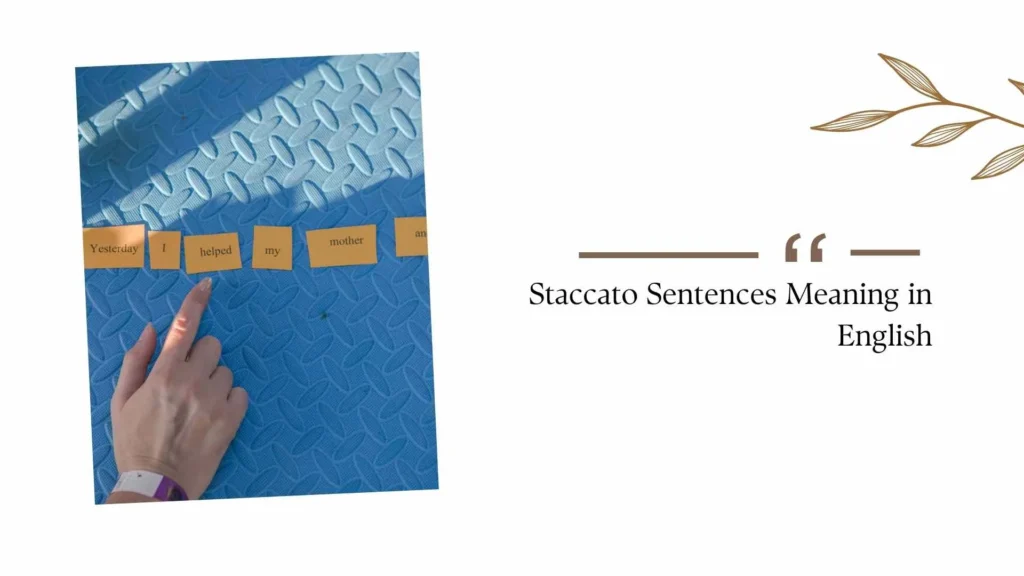
In English, the word “staccato” comes from music. It refers to notes played in a short, detached manner. When applied to writing, staccato describes sentences that are short and separated rather than flowing together.
The purpose is often to:
- Create suspense
- Highlight important ideas
- Increase emotional intensity
- Improve readability
Writers use this technique when they want readers to slow down and focus on specific details.
3 Short Staccato Sentences Examples
Here are three simple examples:
- She waited. Nobody came.
- The clock ticked. Time passed.
- The alarm rang. Everyone froze.
Each example uses short sentence structures to create a strong effect with very few words.
Staccato Sentences AI
AI writing tools can generate staccato sentences when instructed to write in a dramatic or concise style. This approach is often used in:
- Marketing copy
- Storytelling
- Social media captions
- Creative writing
For example:
“Big challenge. Simple solution. Real results.”
The short sentence structure makes the message more memorable and impactful.
Staccato Meaning in English
The English meaning of staccato is “marked by abruptness or brevity.” Originally a musical term, it now describes speech, writing, or actions that occur in quick, disconnected bursts.
Examples:
- A staccato conversation with short replies.
- A staccato writing style with brief sentences.
- A staccato rhythm in music.
The word suggests sharpness, speed, and emphasis.
Staccato Example in Literature
Many famous authors use staccato sentences to create tension and emotion.
Example:
“He stopped. Listened. Waited.”
Although simple, the sequence creates suspense because each action stands alone. Readers naturally pause after each sentence, increasing anticipation.
Writers often use this technique during action scenes, emotional moments, or dramatic revelations.
Staccato Style of Writing
The staccato style of writing focuses on short, impactful sentences. Instead of long explanations, the writer delivers information in quick bursts.
Characteristics include:
- Brief sentences
- Strong emphasis
- Fast pacing
- Clear communication
- Emotional intensity
Example:
“The storm arrived. Winds screamed. Trees bent. Windows rattled.”
This style helps readers experience the scene rather than simply read about it.
When Should You Use Staccato Sentences?
Staccato sentences work best when you want to:
- Build suspense
- Add drama
- Create urgency
- Highlight important information
- Improve readability
However, using them too often can make writing feel repetitive. The best writers mix short staccato sentences with longer, more detailed ones.
Other Meanings
| Field | Meaning | Description |
| Music | Short notes | Played sharply and separately |
| Literature | Writing style | Broken rhythm for effect |
| Film Scripts | Dialogue style | Emotional pauses and tension |
Common Mistakes & Misconceptions
- Thinking it is grammatically incorrect
- Using it in formal writing like essays
- Confusing it with poor writing skills
- Overusing it in professional emails
- Assuming it always means anger
Psychological / Emotional Meaning
Staccato sentences often reflect emotion:
- Positive: Excitement, urgency
- Neutral: Simple instructions
- Negative: Stress, sadness, anger, emotional distance
They mirror how we think in moments of strong feeling.
Similar Terms & Alternatives
| Word | Meaning | Tone |
| Fragmented sentences | Broken structure | Neutral |
| Short sentences | Simple writing | Neutral |
| Choppy writing | Abrupt flow | Slightly negative |
| Elliptical style | Missing words for effect | Literary |
Is It Offensive or Friendly?
Staccato sentences are not offensive by themselves.
But tone depends on context:
- Friendly: “Okay. Got it. Thanks.”
- Cold: “Fine. Do what you want.”
- Emotional: “I miss you. A lot. Still do.”
Grammar or Linguistic Insight
Staccato writing breaks normal grammar flow on purpose.
Instead of connecting ideas with long sentences, it isolates each thought.
This creates rhythm—like heartbeat writing. Short. Fast. Emotional.
How to Respond
If someone texts you in staccato style, you can reply:
- “Hey, talk to me. What’s wrong?”
- “I’m here. You can tell me.”
- “Take your time. I’m listening.”
- “You don’t have to go through this alone.”
Differences From Similar Words
| Style | Structure | Effect |
| Staccato sentences | Short, broken lines | Emotional intensity |
| Long sentences | Flowing structure | Calm explanation |
| Bullet points | Organized list | Informational |
Relevance in Dating & Online Culture
In dating apps like Tinder or chats, staccato sentences often show:
- Mixed emotions
- Emotional confusion
- Cold or distant replies
- Dramatic breakup energy
Example:
“I liked you. I really did. But I can’t do this anymore.”
It feels real, raw, and unfiltered—very Gen Z style.
Popularity & Trends
On TikTok and Instagram, staccato sentences are used in:
- Sad edits
- Aesthetic captions
- Breakup storytelling videos
- Emotional POV content
They trend because they feel “authentic” and relatable.
When NOT to Use Staccato Sentences
Avoid using them in:
- Formal emails
- Academic essays
- Business reports
- Job applications
- Professional documentation
Example of wrong use:
“Dear sir. I am applying. Please accept me.”
FAQs
1. What is staccato sentences meaning in simple words?
It means writing short, broken sentences one after another to create emotion or impact.
2. Where are staccato sentences used?
They are used in chats, poetry, storytelling, captions, and emotional messages.
3. Are staccato sentences correct grammar?
Yes, but only in creative writing. Not suitable for formal writing.
4. Why do people use staccato sentences in texting?
To show emotion, urgency, or dramatic feelings in a short way.
5. Are staccato sentences rude?
Not always. It depends on tone and context of the message.
Conclusion
Staccato sentences are more than just broken lines—they are emotion in written form. They can feel powerful, dramatic, or even deeply personal.
From social media captions to emotional chats, this style helps people express what normal sentences sometimes can’t.
And maybe that’s why they feel so real… because sometimes, emotions don’t come in full sentences either.

Emma Wilson is a lifestyle and wellness writer who focuses on mindful living and personal balance. Her words are warm, relatable, and designed to connect emotionally with readers.
Books:
-
Live Calm, Live Better
-
Everyday Joy Journal